A filmmaking notebook · in progress
Nobody draws anything, and no 3D application is involved
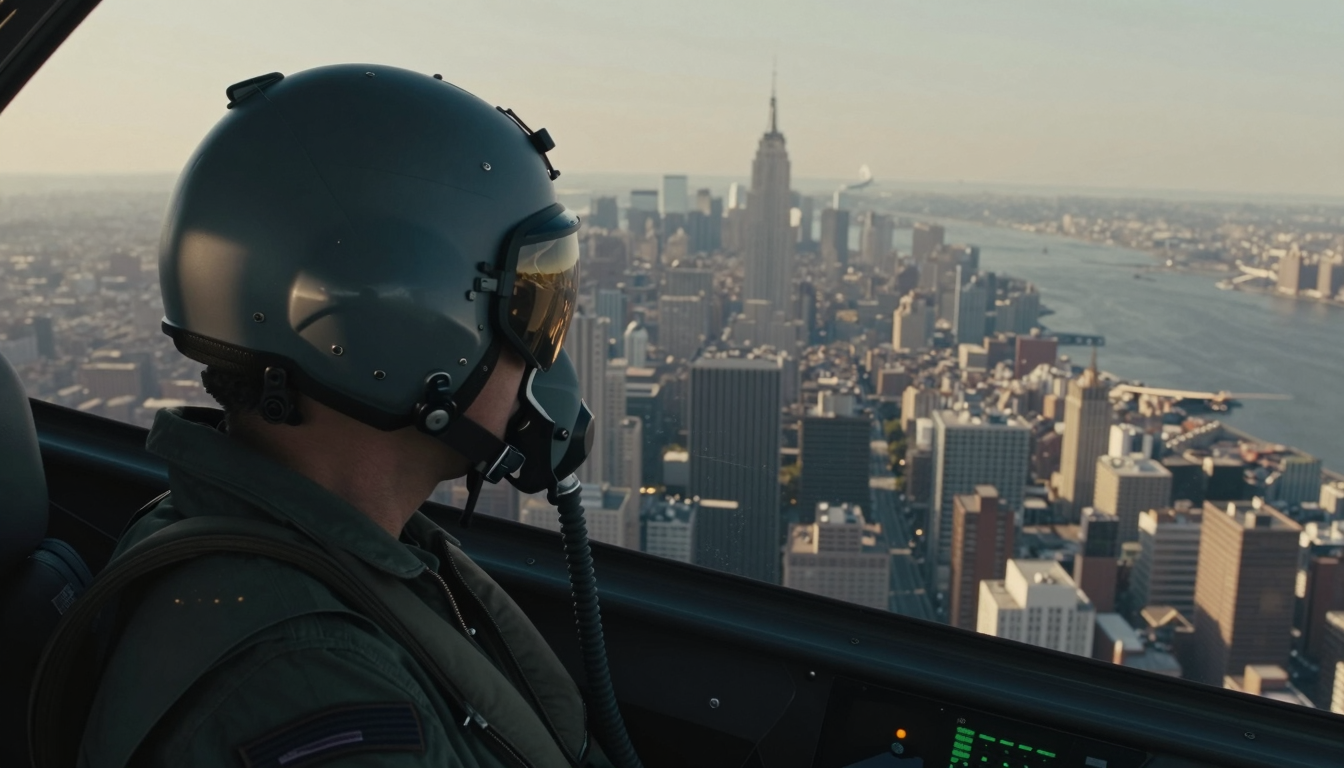
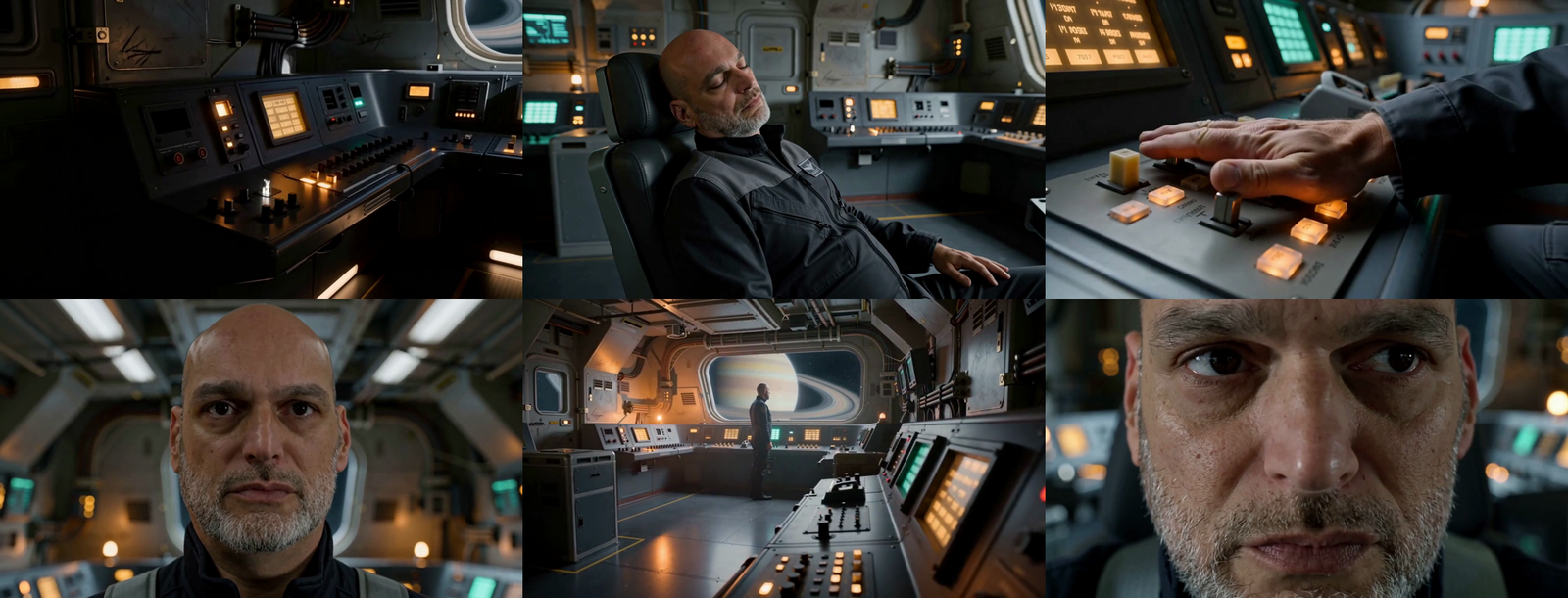
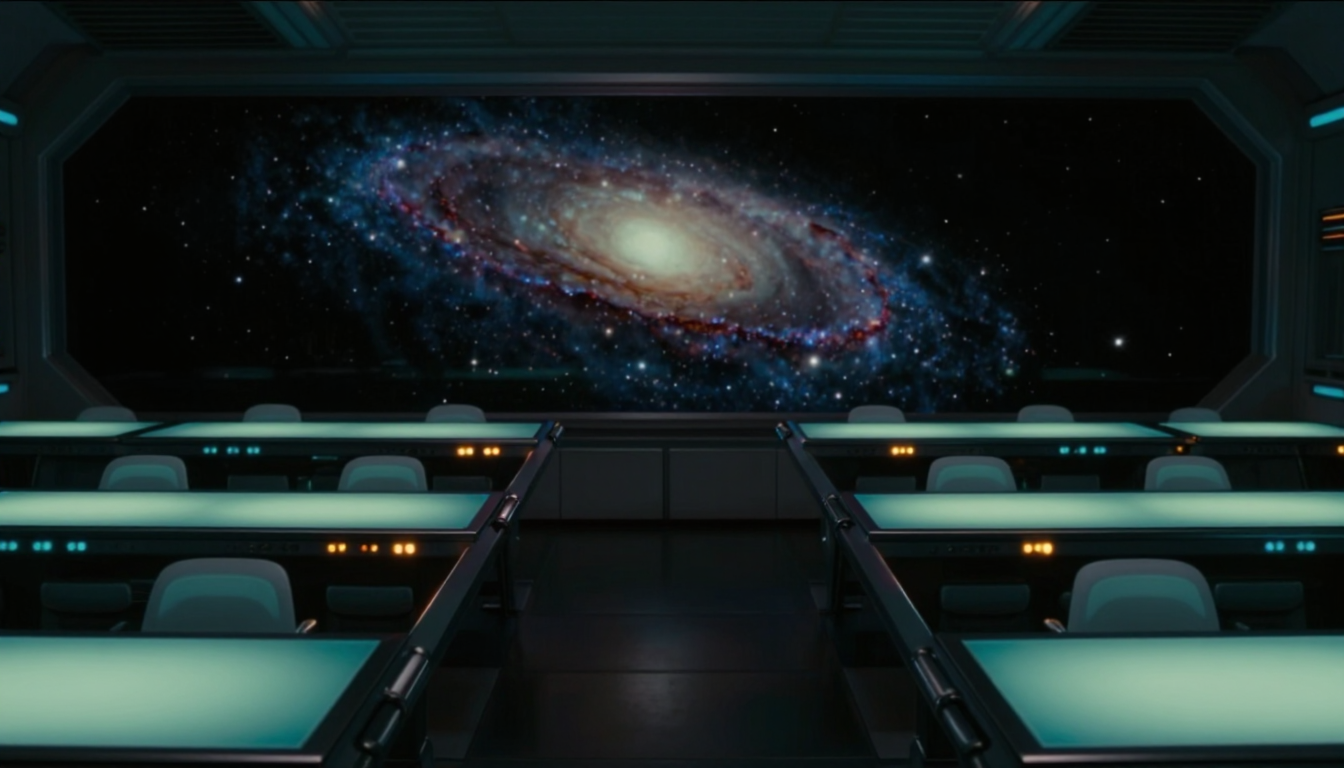
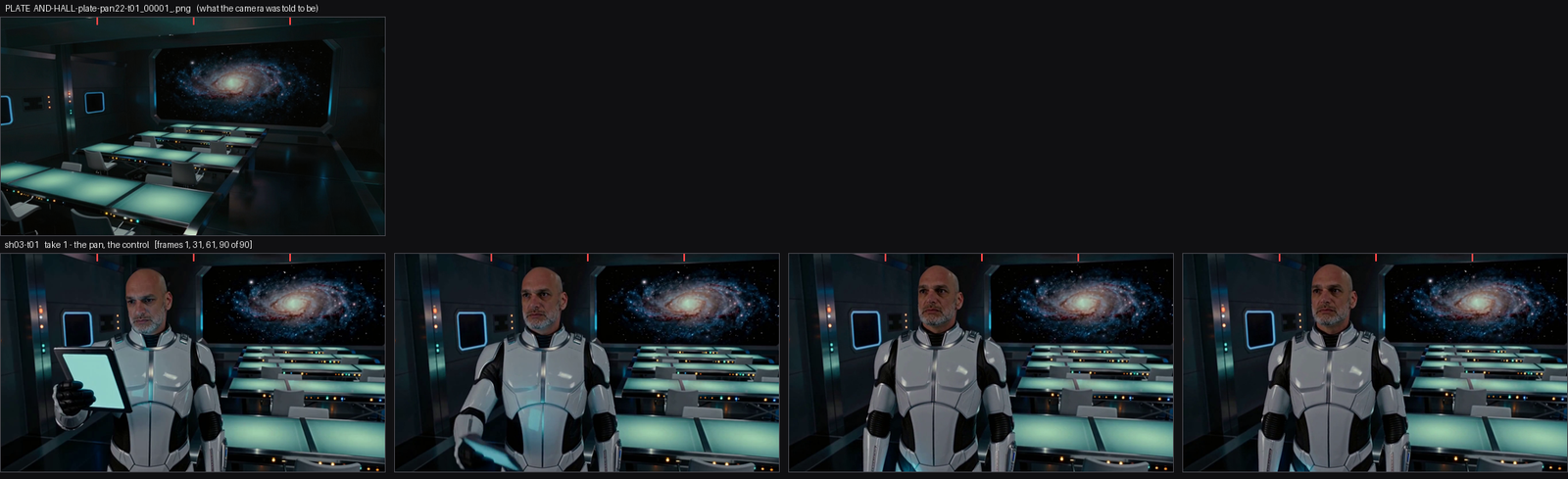
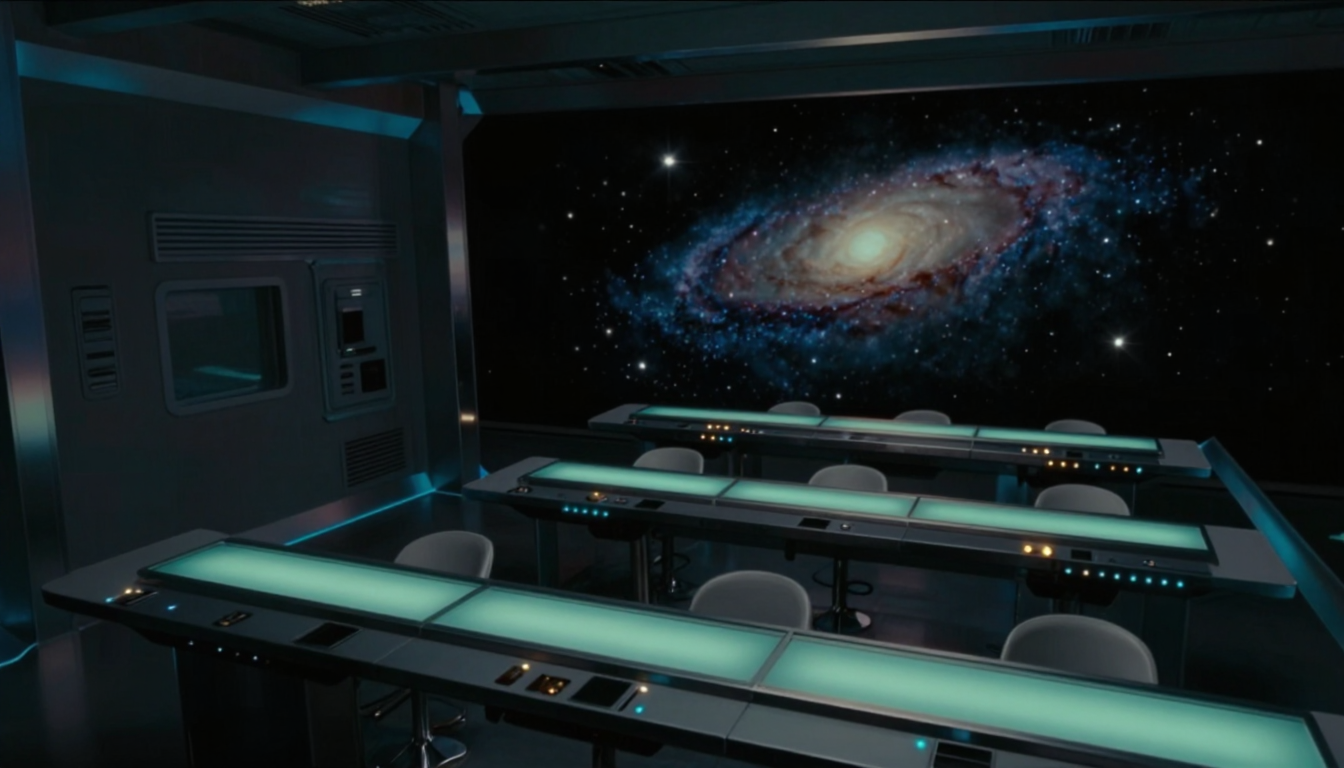
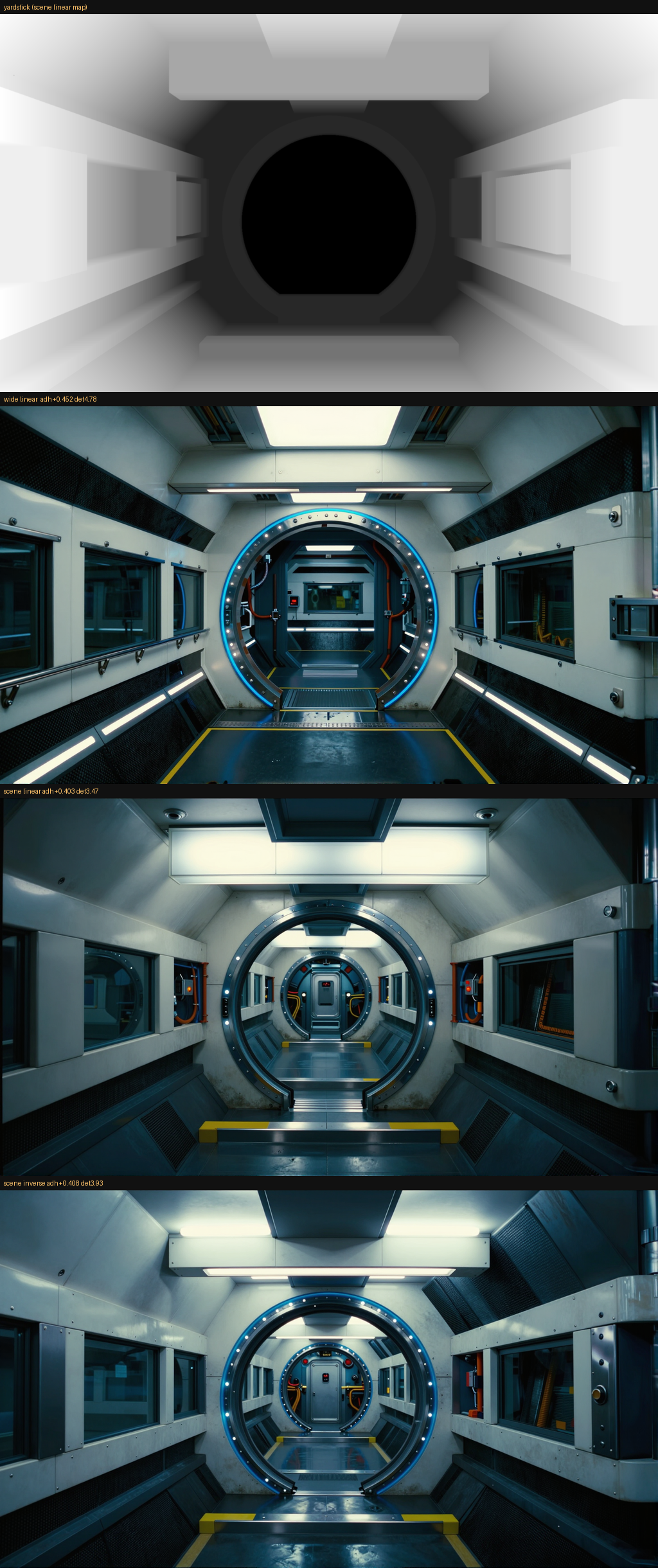
A set is a list of boxes with coordinates in metres. A ray-caster turns that into a grey picture, a still model turns the grey picture into a photograph, and a video model films the photograph. Four steps, and a starship corridor comes out the other end.
This is the working record of finding out what that machine will and will not do — every experiment that changed one thing and held the rest, including the ones that proved us wrong.
The diary · newest first
-
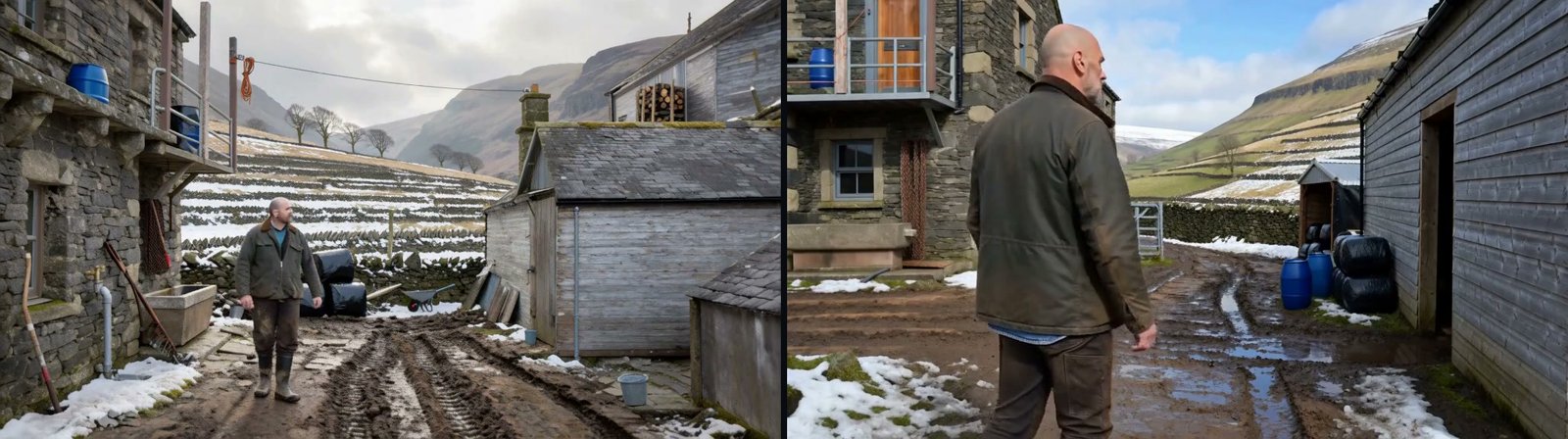
Checkpoint 3 · We can hold the location or the actor’s face, never both
Two engines, mutually exclusive: one keeps the farmyard we built and cannot accept a photograph of a person, the other keeps a likeness and invents its own farm. The same shot made both ways. Three questions.
-
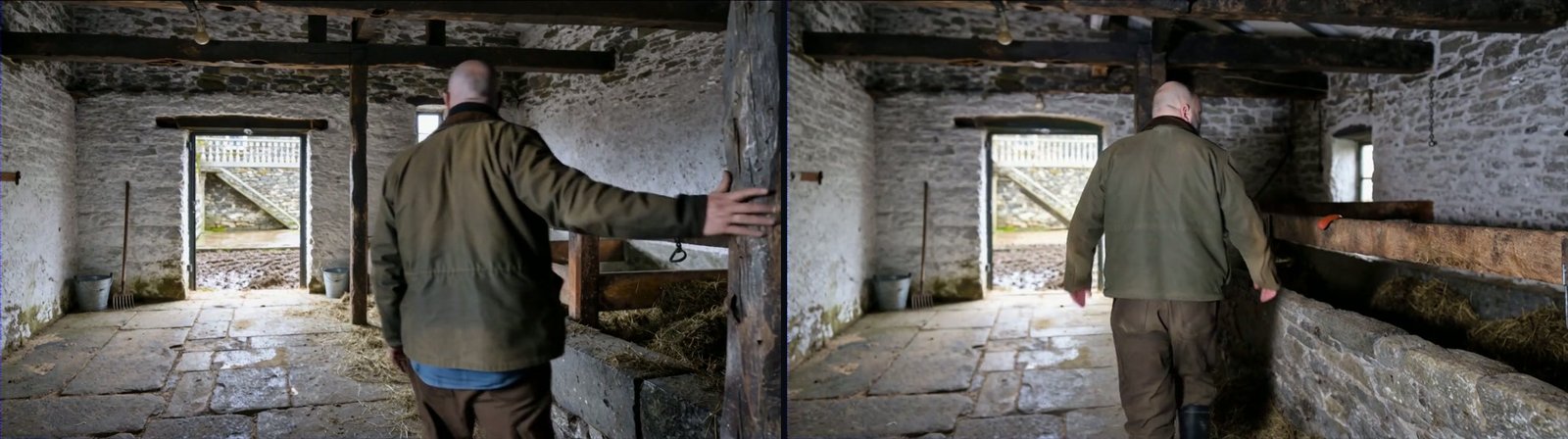
Checkpoint 2 · Nine shots, forty-seven seconds. Does this read as one place?
A complete nine-shot farm sequence, cut together twice, one difference in how it was made. It has been audited shot by shot against eleven continuity checks and never once watched as a film. Four questions.
-
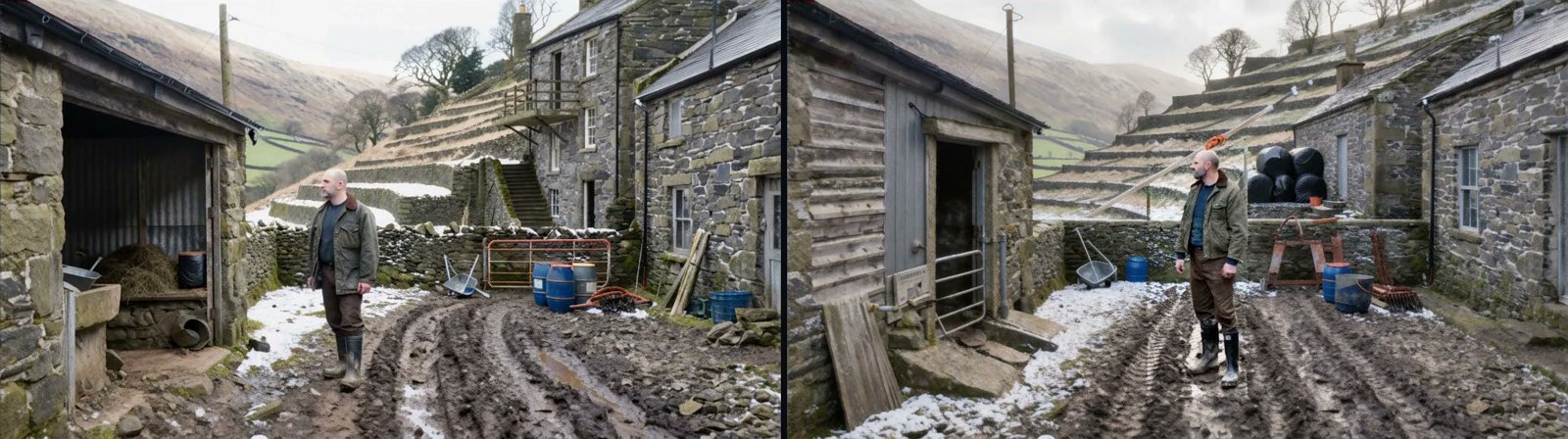
Checkpoint 1 · Two shots that are the same place
Two shots of the same farmyard, cut together. Same camera, same story, same three random starts — the only difference is how the second shot was made. Both versions start on the correct yard. Three questions, and what to look for in each.
-
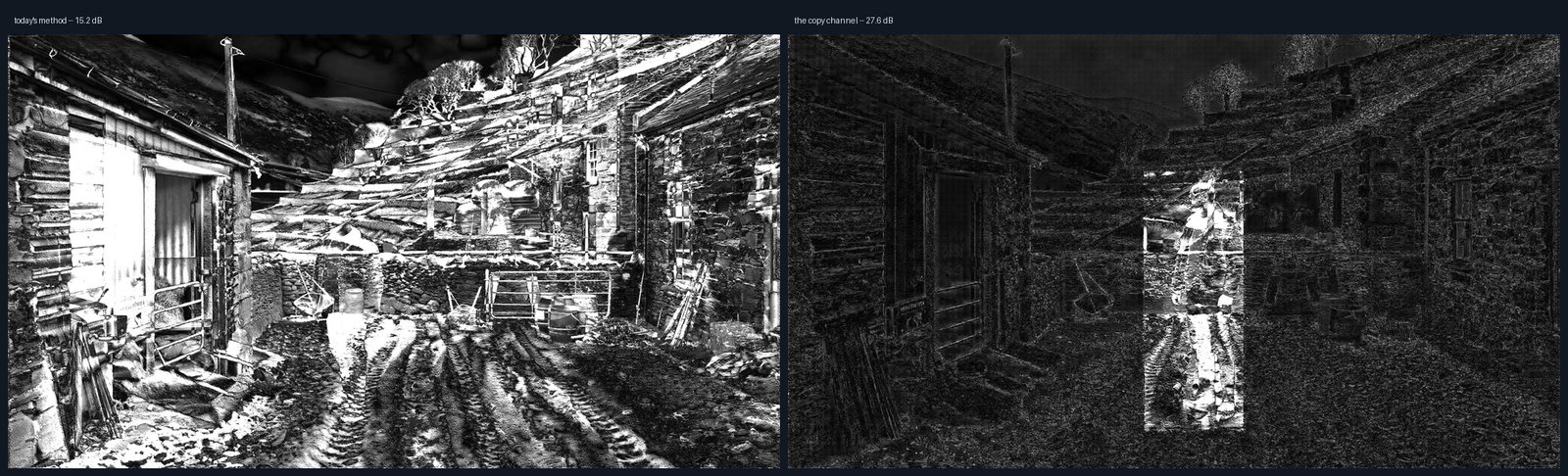
One instrument turned out never to have existed
We have been telling the machine which side of the frame things go on. It turns out those sentences do nothing at all — and the one render that looked like proof they worked was the machine agreeing with us by coincidence. Meanwhile, a trick for copying the previous picture finally made two shots the same place.
-
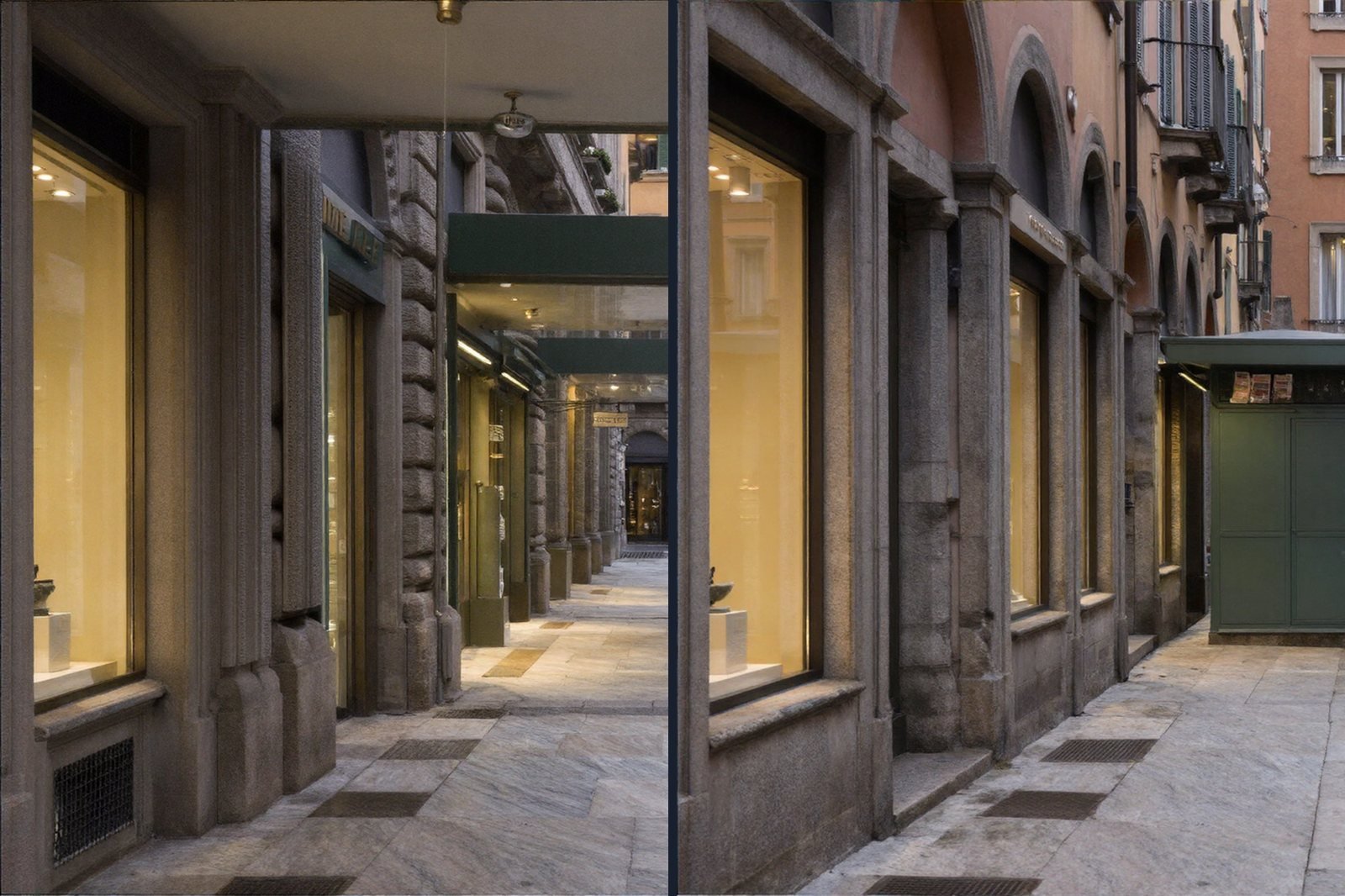
The drawing was lying, and we spent three sessions blaming the words
We kept telling the machine which side of the street the arcade was on. It kept putting it on the other side. The fault was not in the words — it was in a set we drew ourselves, quietly saying the opposite.
-
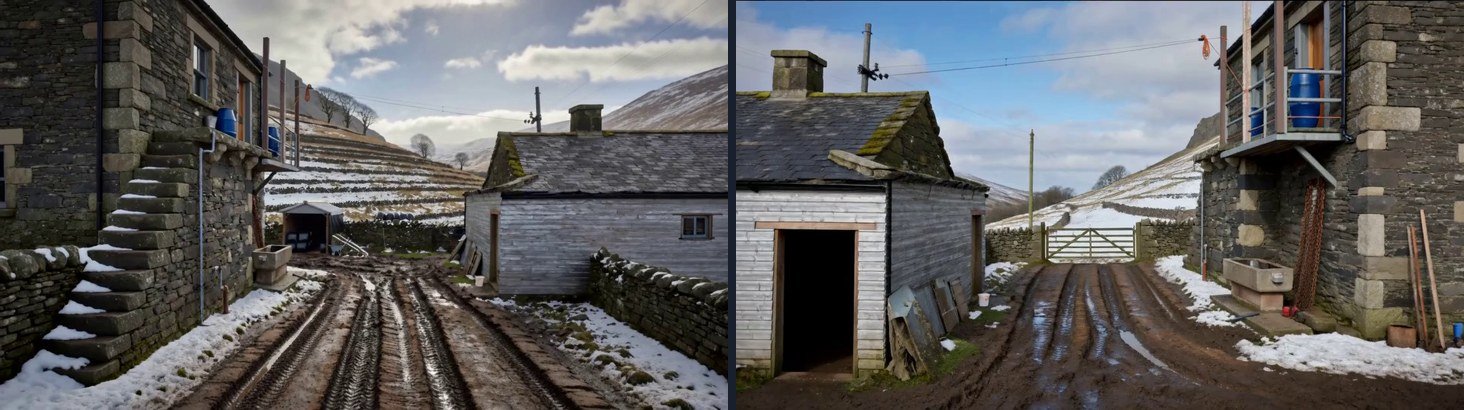
The model can be told to turn round. It cannot be told which way is which.
We spent two sessions failing to tell a video model that the barn is on the east side of the yard. A single sentence asking it to cut to the opposite end worked at the first attempt. Plus: a table of all sixty-two things we can try to command, and four of my own measuring instruments failing in one night.
-
A reverse angle cannot be shot by turning the camera round
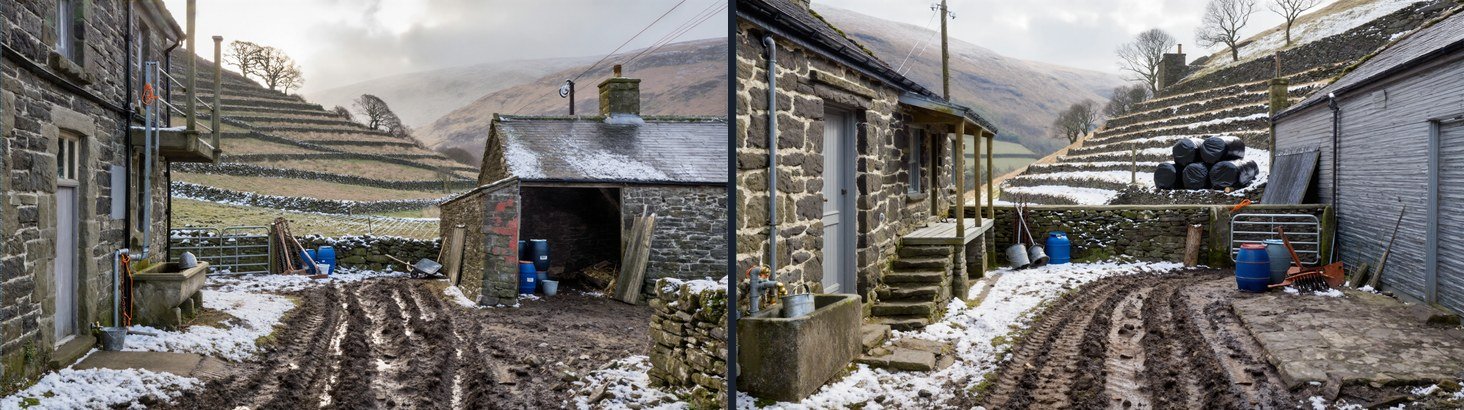
Two cameras at opposite ends of the same farmyard, pointing at each other. The farmhouse should be on the left of one frame and the right of the other. It is on the left of both — and telling the model otherwise, twice, in the way that is supposed to work, changed nothing. Plus: the video control nobody had ever used turns out to insert a cut.
-
The drawing can be five times worse and the picture barely notices
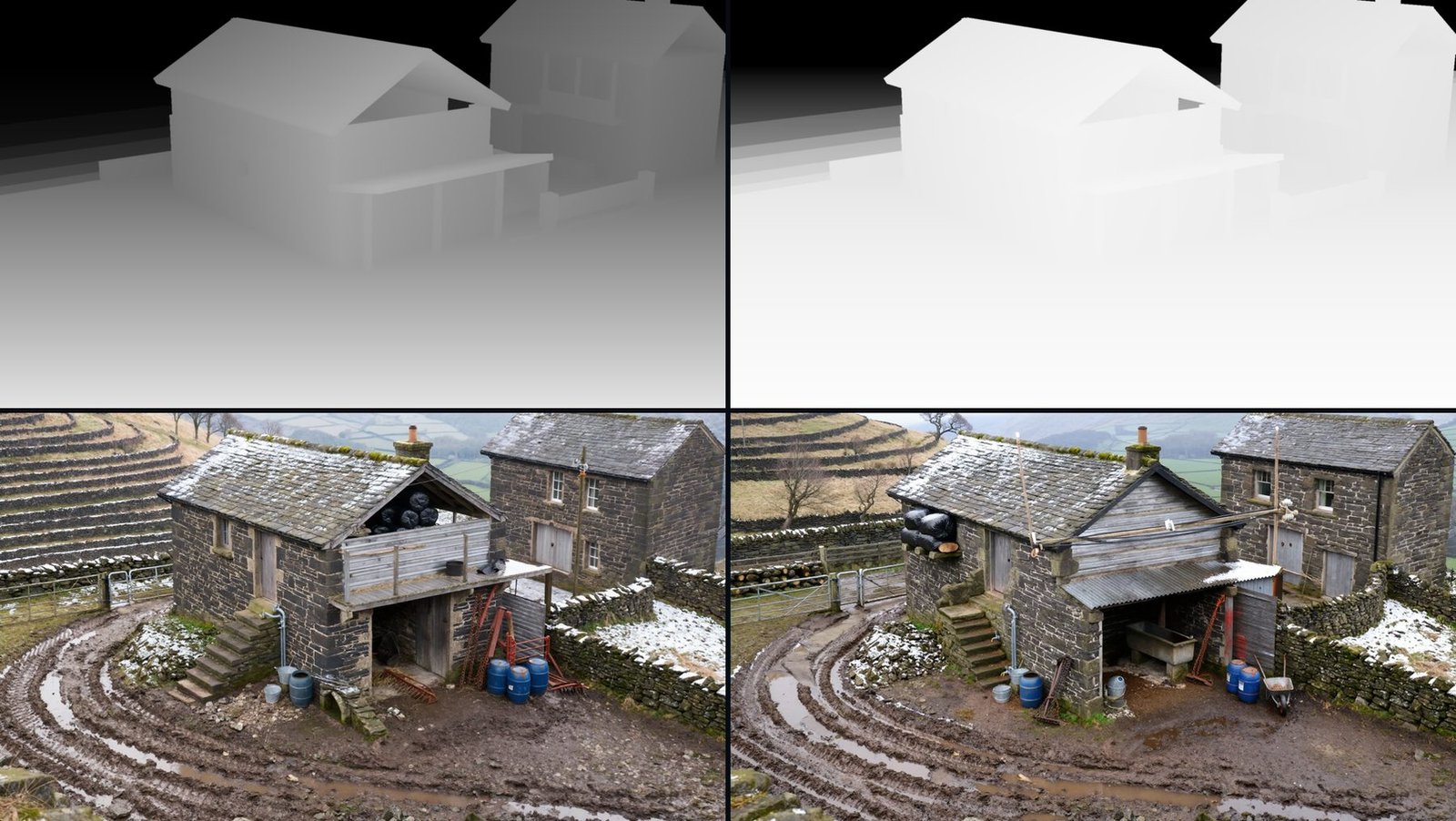
Two grey drawings of the same farmyard, one with five times the room to describe the buildings in. The photographs they produced are about one standard deviation apart. What a depth drawing can and cannot hold at landscape scale, in metres.
Start at the beginning
The notebook reads as one long argument, and it is a better one from the front. Day one is where every assumption still stands.