How it works · start here if nothing else makes sense yet
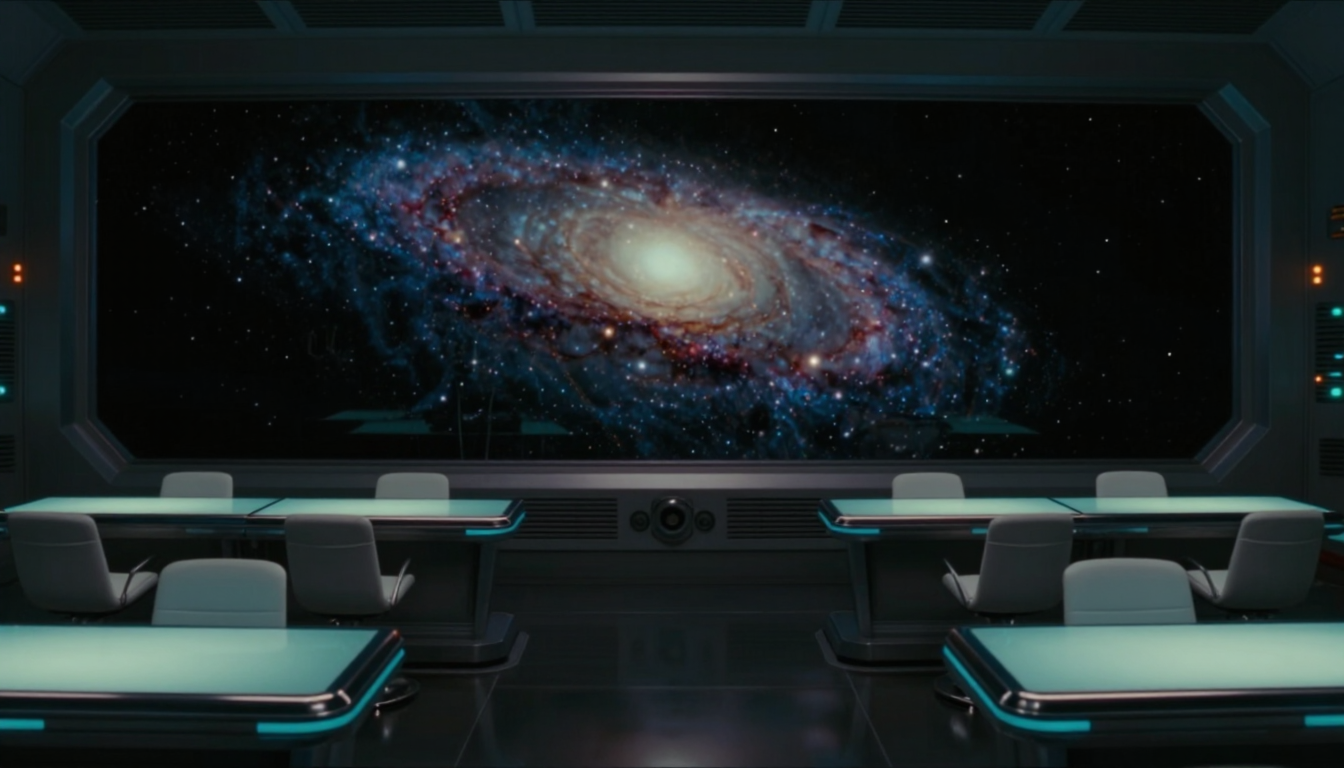
There is no camera, no set, no crew and no 3D software. A shot begins as a list of boxes in a text file and ends, about eleven minutes later, as a few seconds of film with sound.
Here is the whole thing, one step at a time, with the actual pictures each step produces. No jargon that isn’t explained the first time it appears.
Steps
4
Machines
1
Time for one shot
~11 min
Drawing involved
none
Step one
Write the set down as boxes
A “set” here is not a model of anything. It is a text file that says where the solid things are, in metres. A wall from here to there. A doorway 0.9 m wide in that wall. A beam across the ceiling at 2.4 m. A step in the floor.
{ "name": "port wall",     "min": [-1.30, -8.5, 0.0], "max": [-1.10, 8.5, 2.6] }
{ "name": "ceiling",       "min": [-1.30, -8.5, 2.6], "max": [ 1.30, 8.5, 2.8] }
{ "name": "hatch surround","min": [-1.30,  8.5, 0.0], "max": [ 1.30, 8.7, 2.6] }
{ "name": "service alcove","min": [ 1.10,  1.2, 0.4], "max": [ 1.30, 2.6, 1.8] }
That is genuinely all it is — corners of boxes. It takes a few minutes to write a corridor and it is exact: the doorway is where you said, to the centimetre, and it will be in the same place tomorrow and in every other shot of that corridor.
Why boxes and not real modelling
Because nobody ever sees them. They are not there to look good — they are there to tell the next step where the walls are. A modelled set takes a week. This takes a coffee. And the beauty arrives later, for free.
Step two
Turn the boxes into a grey picture
A short program stands a virtual camera in the middle of those boxes and, for every pixel, works out how far away the nearest surface is. Near things come out bright, far things come out dark. The result is called a depth map, and it looks like this.
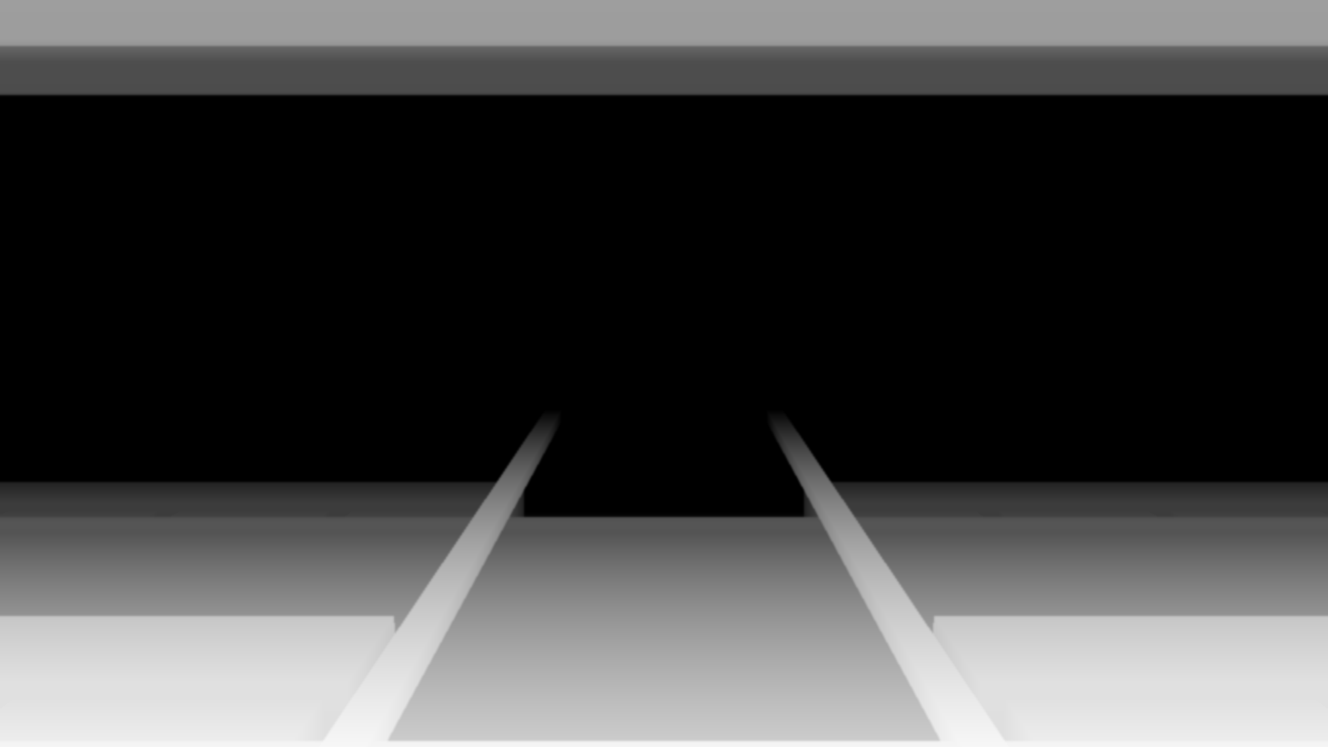
This is the single most important picture in the pipeline, and it is the one nobody sees. Everything that has to stay the same between two shots has to be in here — because it is literally the same file, viewed from a different position.
Step three
Turn the grey picture into a photograph
Now an image model gets two things: that grey picture, and a written description of what the place is made of. Not what shape it is — the shape is already settled — but what it is like. Brushed aluminium. Scuffed white composite. Cyan strip lighting along the floor seam. Milled cooling vents.
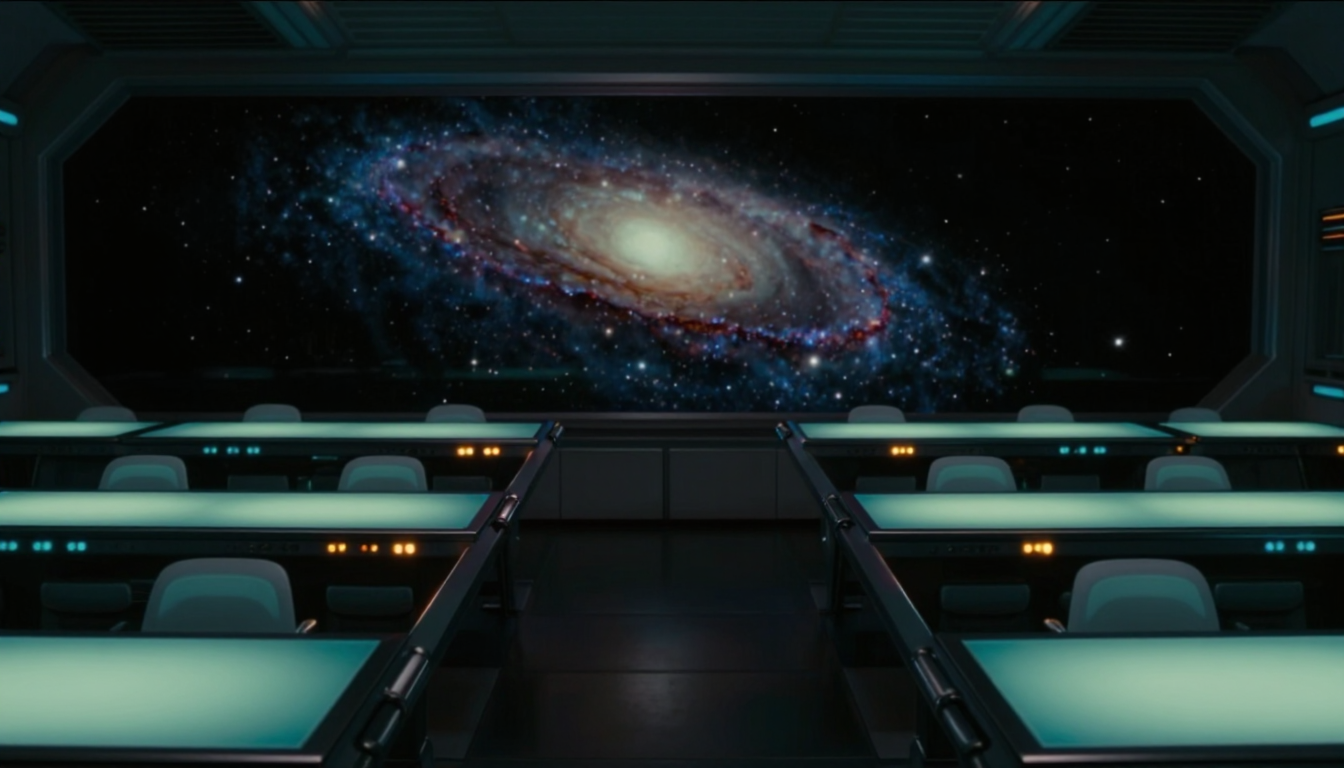
How strictly the model must obey the grey picture is a dial, and where you set it is the single most consequential decision in the whole process. Turn it down and you get a gorgeous room that is a different gorgeous room from every camera. Turn it up and you get the same room every time, slightly under-dressed.
| Obedience dial | What you get | Use it for |
|---|---|---|
| 0.45 — loose | dense and beautiful, and the aisle you asked to keep clear has furniture in it | nothing. It is a mood board, not a set |
| 0.65 — middle | geometry holds, ornament comes back | a single plate, seen once |
| 0.90 — tight | the same room from four cameras | anything that has to cut together |
Step four
Film the photograph
The last step hands that still plate to a video model, along with photographs of the actor, a description of what he does, and where the camera goes. Ten to thirteen minutes later there are a few seconds of film — and sound, generated in the same pass. There is no sound library anywhere in this system.
The shape of the whole thing
Control is won early and lost late
If you take one idea away from this page, take this one. Each step is faster and easier to write than the one before it, and each step is less obedient than the one before it. Boxes do exactly what they are told. Words do roughly what they are told. The video model does something inspired by what it was told.
And the actor
A person is two photographs and a sentence
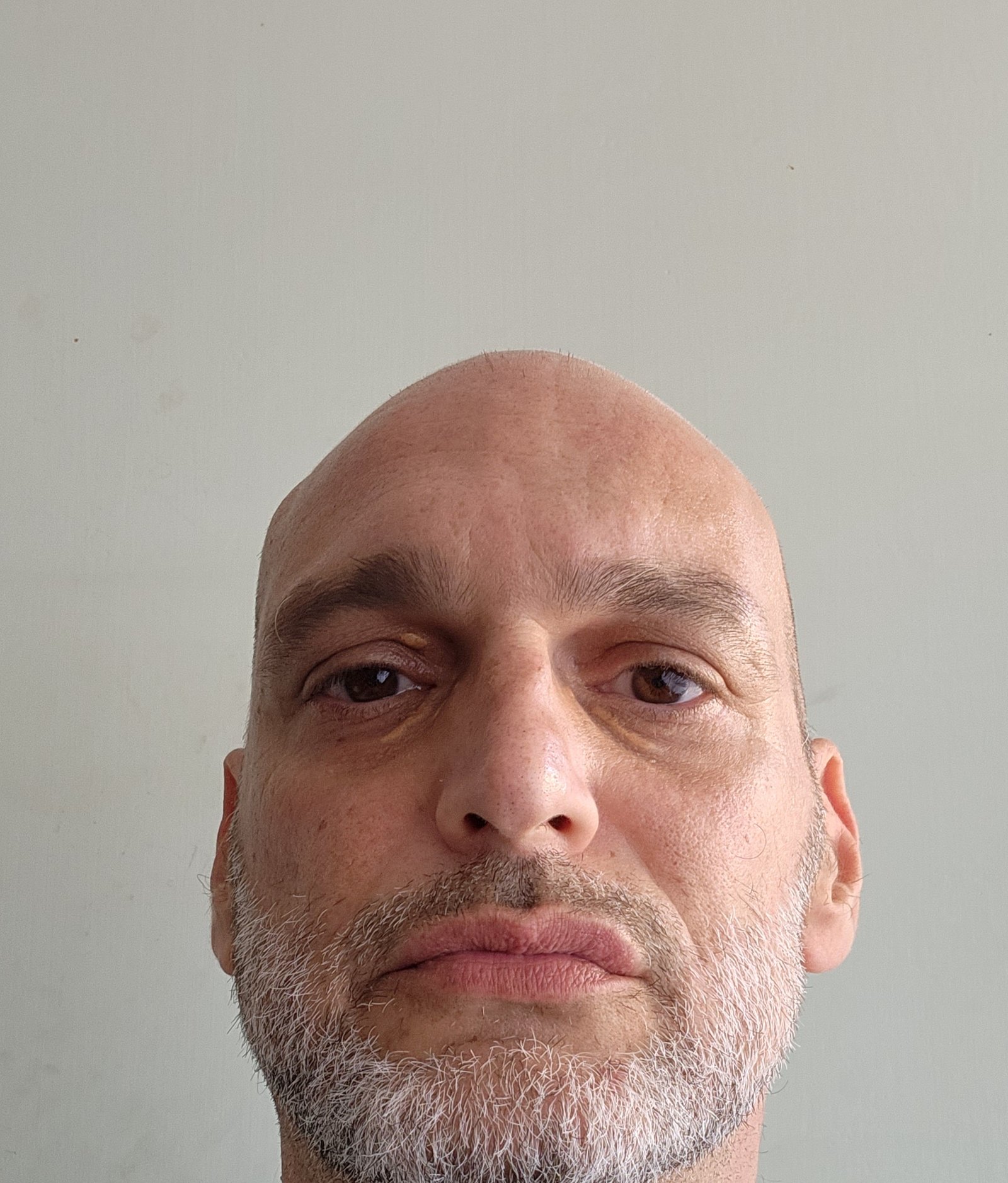
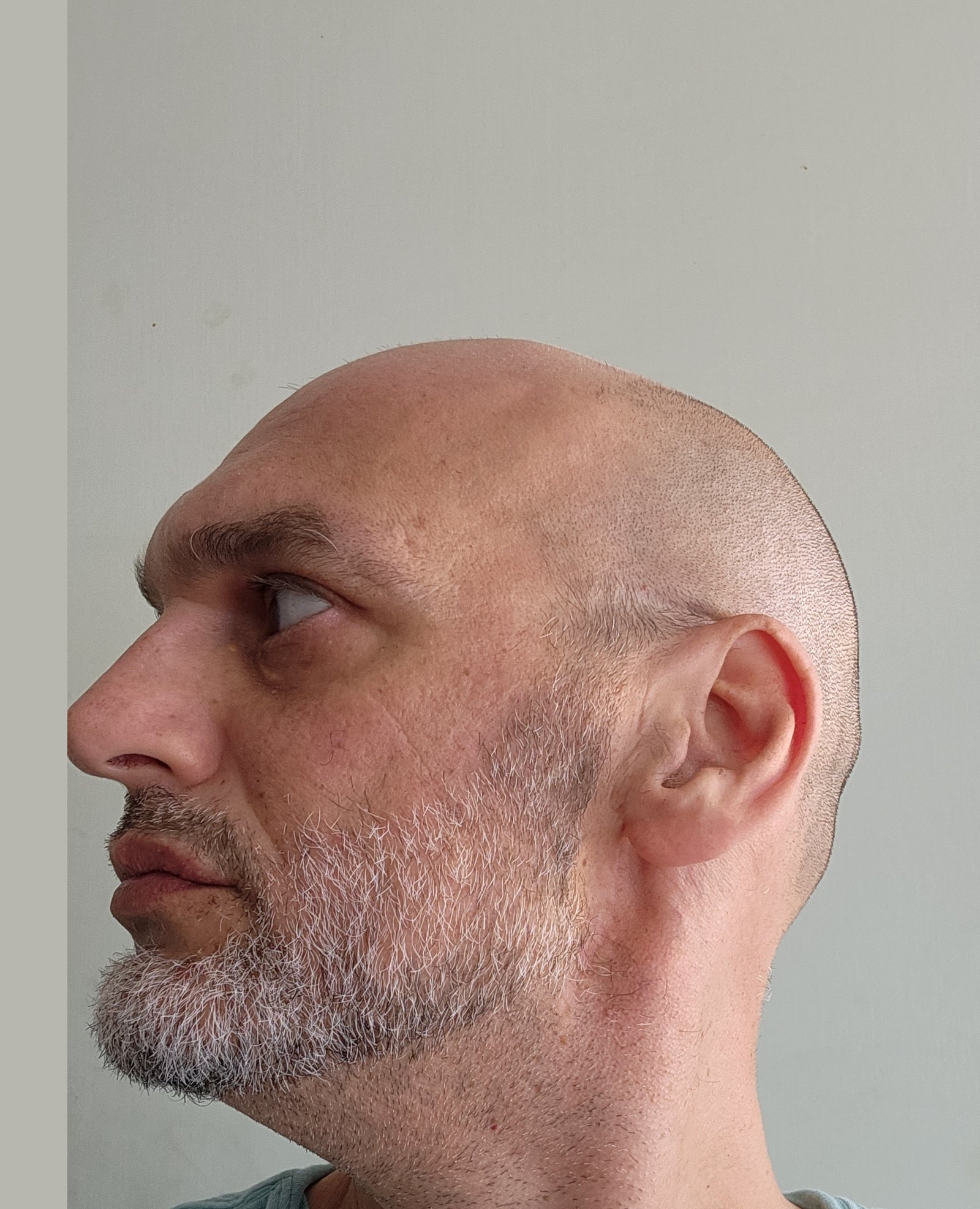
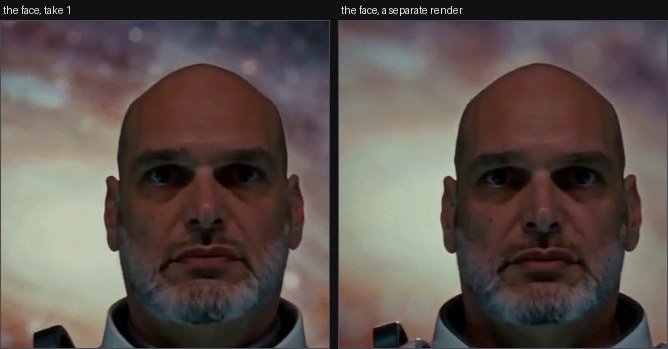
The man in these shots is Gabe, whose project this is. He appears because he can spot his own face drifting in a way a stranger’s face would hide — it is instrumentation, not vanity. Two ordinary photographs go in, bound to a named character, and the costume comes from text alone.
What a night produces
Six or seven minutes of film, unattended
Useful arithmetic if you are wondering whether any of this is practical. One assembled sequence took 1,244 seconds of computing to produce 16.9 seconds of finished cut — about 74 times real time. Over an eight-hour unattended night that is roughly six to seven minutes of footage.
That number moves a lot. Longer shots cost more per frame. Every reference photograph adds a surcharge. Inserts — a close-up of a hand, a detail on a console, anything with no face in it — are the cheapest thing you can shoot, and they are also how you control the rhythm of a scene. An insert carries only the set reference, and it hides an edit.
Nothing above is the hard part.
Any of these steps produces a nice picture on the first attempt. The difficulty is making the second picture agree with the first — the same face, the same room, a camera that appears to have moved, a light that has not changed for no reason. That is what the rest of this site is about, and most of it is a record of getting it wrong.
Next: the five days, in order — the working diary, including the days that went backwards. Or, if you would rather skip straight to the interesting failures, everything we got wrong and what each mistake cost.